
They look like a scene from a postcard, but to a contractor, those long icicles hanging from your gutters are a “Check Engine” light for your house. After a foot of snow in the Greater Boston area, the stage is set for Ice Dams: the silent roof killers that cause thousands in water damage before you even realize there’s a leak.
What is an Ice Dam?
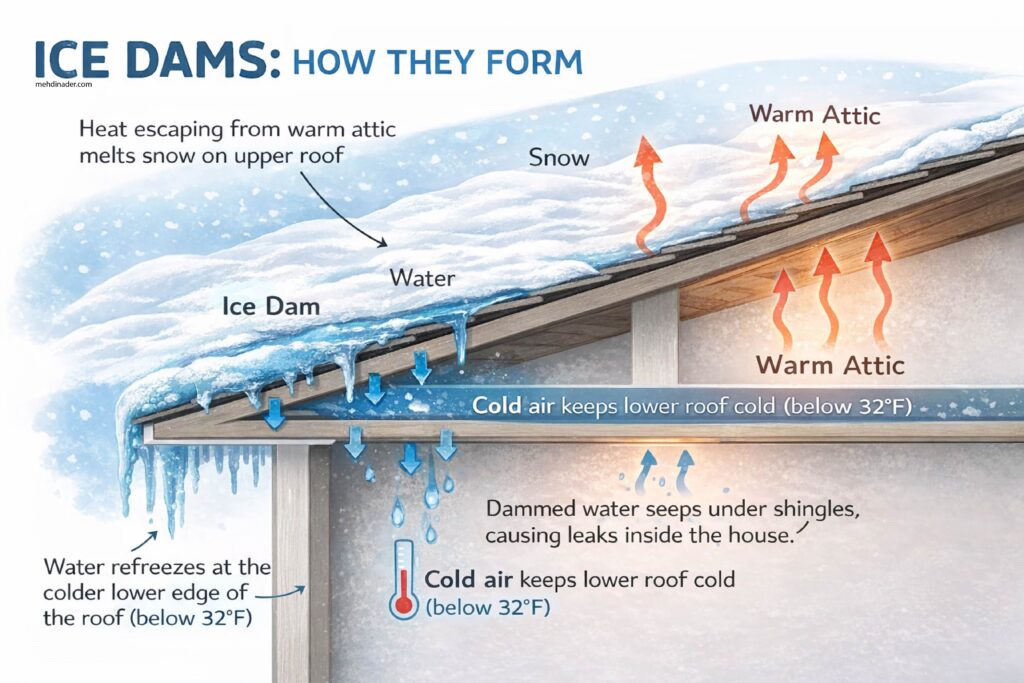
An ice dam occurs when heat from your attic melts the snow on your roof. That meltwater runs down to the edge of the roof (the eaves), which is colder because it overhangs the house. The water freezes there, creating a “dam” of ice. Behind that dam, more meltwater pools up, gets under your shingles, and eventually drips into your insulation, ceilings, and walls.
3 Immediate Steps to Protect Your Home Today
If you’re watching the snow pile up, here is your “Master Plan” for the next 24 hours:
1. The Roof Rake (The Safest Move) If you can safely reach your roof from the ground, use a roof rake to clear the first 3–4 feet of snow from the eaves. By removing the “fuel” for the ice dam, you allow any trapped water to run off. Contractor Tip: Never climb a ladder in the snow, and never use a hammer or shovel to chip at the ice—you will puncture your shingles.
2. The “Stocking” Trick If an ice dam has already formed and water is backing up, grab a pair of old pantyhose and fill them with Calcium Chloride (not rock salt, which kills your grass and corrodes gutters). Lay the stocking vertically across the ice dam so it overhangs the gutter. It will melt a “channel” through the ice, allowing the trapped water to drain safely.
3. Check Your Attic Temperature If it’s 20°F outside but your attic feels like a sauna, you have a problem. That heat loss is what’s causing the snow to melt. In the short term, try to keep your attic as cool as possible by ensuring your soffit vents aren’t blocked by insulation.
The Long-Term “Master Plan” Solution
As a design-build contractor, I don’t just look for leaks; I look for the source. Most ice dams in Easton’s historic or older homes are caused by:
- Poor Insulation: Heat escaping into the attic.
- Inadequate Ventilation: No way for that heat to escape before it warms the roof deck.
- Air Leaks: Unsealed light fixtures or attic hatches.
When I walk through a home with my real estate clients, I’m checking the “bones”, the R-value of the insulation and the airflow of the ridge vents. Fixing these issues isn’t just about preventing ice; it’s about lowering your heating bills year-round.
Worried about your roof after this storm?
Don’t wait for the brown spots to appear on your ceiling. Whether you’re looking to buy a home that’s “winter-proof” or you want a contractor’s eye to evaluate your current property, let’s talk.
Fill out the below form to schedule a “Home Health Audit” with Mehdi